The challenge
Managing a fleet involves more than keeping track of individual vessels and machines. Users need to understand what's happening across their fleet while still being able to access the details of each unit when needed.
The challenge was to create an experience that brought fleet information and unit information together in a clear and manageable way. It needed to support different operational needs, make it easy to navigate between the fleet and individual units, and provide a foundation that could work for users with different levels of access.
My role
I acted as the feature owner and product designer, working across the definition, design and delivery of the fleet management experience.
My responsibilities included:
- Defining feature requirements and identifying user needs.
- Aligning stakeholders around the structure and functionality of the experience.
- Establishing the information hierarchy across fleet and unit-level views.
- Designing key management flows, including adding units and inviting members.
- Considering roles and access when shaping the invitation experience.
- Collaborating with developers to clarify functionality and support implementation.
Key design decisions
-
Connect the fleet overview with individual units
A fleet overview needs to provide a useful summary, but users also need to investigate individual units.
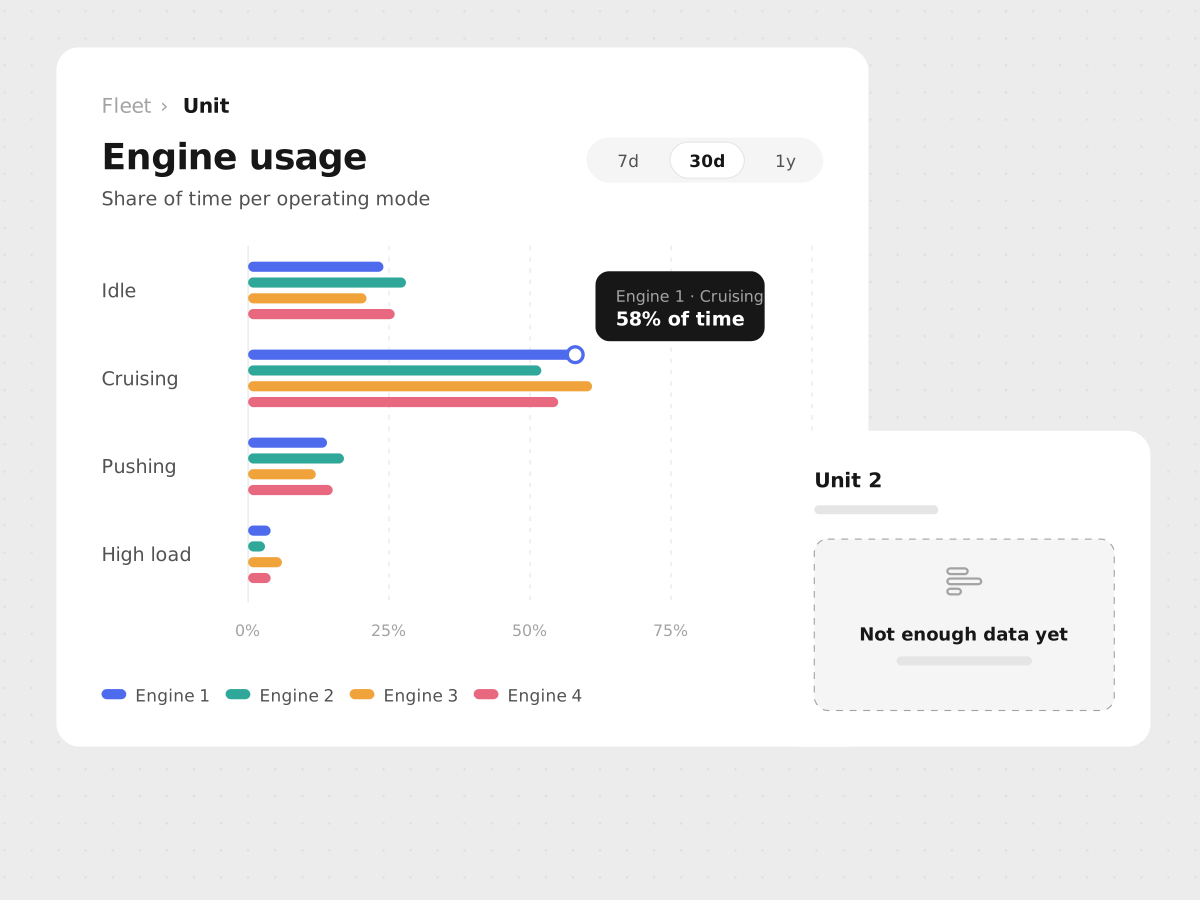
I focused on creating a clear pattern between the fleet-level and individual unit experiences. The overview provides the broader context, while each unit has its own area for more detailed information.
This created a structure where users can easily move between the fleet and individual details without losing context.
-
Make fleet access easier to manage
A fleet can involve several people with different levels of access. Giving everyone the same access wouldn't reflect how they actually work day to day.
I designed an invitation flow based on shareable, single-use invitation links. Before generating a link, the user decides which role or roles the invited person should be assigned.
This made the process feel more deliberate and gave users a clear way of controlling who has access to their fleet and what they're able to do.
Outcome
The work established a more structured approach to managing fleets, connecting units to specific fleets and giving users a clearer way to navigate. The result was a system that better supports users' fleet management needs.
We also introduced a clearer way to manage access through role-based invitations.
Together, these decisions created a solid foundation for continuing to develop and improve the fleet management experience.
What I learned
This project pushed me towards a more holistic approach, highlighting the importance of recognising the relationships between different parts of the product instead of treating every new feature as an isolated experience.
A fleet management tool needs to work at different levels. Users should be able to understand the overall picture, see individual units and manage people without friction.
Taking ownership of this feature meant looking beyond individual experiences, and instead at how the different parts work together to create a better product experience.